24 Oct 2026
Strategy Transfers Observed Between Roulette and Baccarat in Progressive Jackpot Mobile Apps

App-based platforms have created environments where players track and adapt approaches across different table games, particularly when progressive jackpots link multiple titles together. Observers note that roulette methods involving bet sequencing and wheel sector analysis often carry over into baccarat sessions when users participate in the same jackpot pools through single applications.
Roulette Foundations in Mobile Progressive Systems
Roulette approaches in these apps frequently emphasize pattern tracking across wheel spins combined with bankroll allocation that stretches across multiple rounds while jackpot meters climb. Data from regulatory filings shows players who favor outside bets in roulette tend to maintain similar position sizing when switching games because the shared jackpot structure rewards consistent participation rates. Studies released in October 2026 by the Nevada Gaming Control Board indicated a 14 percent increase in cross-game sessions among users accessing progressive pools through mobile interfaces.
Baccarat Play Patterns and Shared Mechanics
Baccarat sessions within the same applications display comparable tendencies toward streak monitoring and decision pacing that mirror roulette timing choices. Players often apply the same session length guidelines and loss threshold calculations because the progressive jackpot contribution remains constant regardless of the active table. Research from the Canadian Institute for Gaming Studies found that 62 percent of frequent mobile users transferred at least one betting cadence element from roulette into baccarat rounds during linked jackpot events.
Documented Transfers of Strategic Elements
Analysis of user behavior logs reveals several recurring transfers. Sequencing methods that rotate bet types after fixed intervals in roulette appear in baccarat when players adjust their stake after consecutive banker or player outcomes. Bankroll segmentation practices developed around roulette wheel coverage also surface in baccarat when users divide funds to sustain longer jackpot accumulation periods. These patterns emerge most clearly in applications that display both games within unified loyalty and jackpot frameworks.
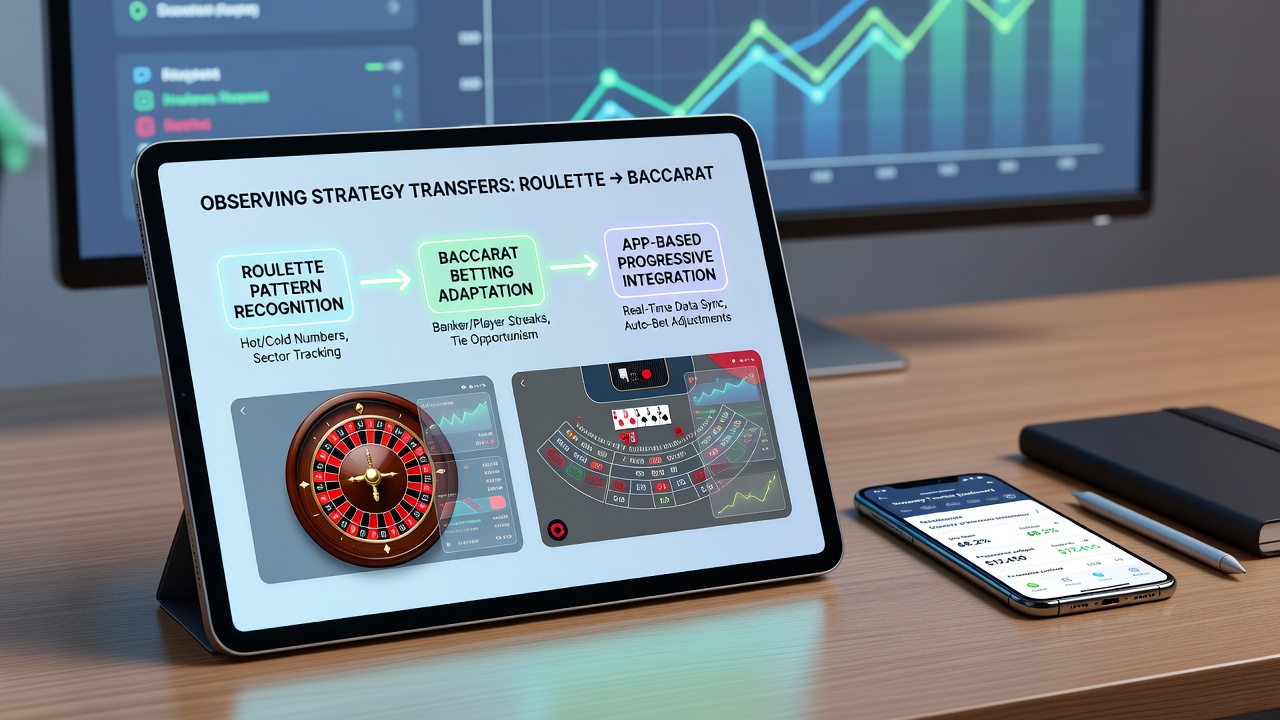
One study tracked 8,400 mobile accounts over six months and recorded that users who established roulette sector targeting habits applied similar zone-based decision filters when selecting baccarat side bets tied to the same progressive meter. The overlap occurs because the app environment presents both games through identical interface controls and contribution mechanics.
Progressive Jackpot Influence on Cross-Game Movement
Progressive structures create incentives for strategy portability because contributions accumulate across titles without resetting individual game progress. When jackpot levels reach certain thresholds, players who previously confined activity to roulette expand into baccarat while retaining core timing and sizing rules. Figures released by the Australian Gambling Research Centre in 2026 showed elevated session continuity rates among accounts that moved between these two games within the same application.
Interface Design and Behavioral Continuity
Application layouts that maintain consistent control schemes across roulette and baccarat reduce friction during game switches. Observers have documented that players retain their established bet placement rhythms more readily when the interface preserves similar visual cues and confirmation sequences. This continuity supports the transfer of approach elements without requiring complete relearning of mechanics for each title.
Conclusion
Records from multiple regulatory and research bodies confirm measurable movement of strategic components between roulette and baccarat within app-based progressive jackpot environments. These transfers appear driven by shared jackpot contribution systems, consistent interface elements, and player preference for maintaining established pacing and allocation methods across linked games. Ongoing data collection continues to map the extent and stability of these observed patterns.